Best Metering & Usage-Based Billing Solutions 2026
A comparison of the leading platforms for usage metering, rating, and consumption-based billing. Updated for 2026 with detailed reviews, pricing guidance, and recommendations based on what each platform can — and can’t — do beyond the invoice.
Looking for the full monetization picture? Explore the Zenmeter platform.

























Key considerations for choosing a metering and billing solution
Before comparing platforms, understand the criteria that matter most. A billing tool tells you what a customer owes — it doesn’t necessarily control what their software can do.
Metering Accuracy & Latency
Usage events need to be captured and rated close to real time — the tighter the loop between consumption and access control, the less revenue leaks through unbilled or unenforced usage.
Pricing Model Flexibility
Seats, usage, credits, hybrid, AI tokens — can the platform support every model you need now and the ones you will need next, without an engineering project?
Entitlement & Access Control
Metering tells you what happened. Does the platform also decide what a customer’s software is allowed to do next, in real time, including offline?
On-Premise & Hybrid Support
Pure billing platforms assume a live event stream from a cloud service. Can the platform also meter and bill usage-based features inside an installed, on-premise application — at the same time as the cloud services it connects to?
Back-Office & Payments Integration
How does it connect to your CRM, payments processor, and finance stack — and does it try to own that layer, or stay neutral so you can choose your own?
Revenue Intelligence
Billing-accuracy reporting serves finance. Does the same usage data also surface trial-conversion, upsell, and churn signal for product and sales teams?
Quick Comparison
Metering & usage-based billing solutions comparison
| Rank | Platform | Best For | Pricing |
|---|---|---|---|
| #1 | Nalpeiron Zenmeter | Software vendors that want usage-based billing driven directly from the product — real-time metering, entitlement enforcement, and licensing in one platform, not stitched together from a separate billing tool | Transparent, scales with your business — no per-transaction billing-volume fee. |
| #2 | Metronome | Stripe-native SaaS teams needing high-volume, SQL-driven usage metering and billing | $$ (Usage-based — $100K billing volume included, then 0.8%) |
| #3 | M3ter | Salesforce-native enterprises consolidating usage data into Agentforce Revenue Management | Custom (Enterprise quote-based) |
| #4 | Orb | Developer-first AI and SaaS companies needing flexible, code-configurable hybrid pricing | Custom (Enterprise quote-based, not publicly listed) |
Detailed platform reviews
In-depth analysis of each platform's features, strengths, weaknesses, and ideal use cases.
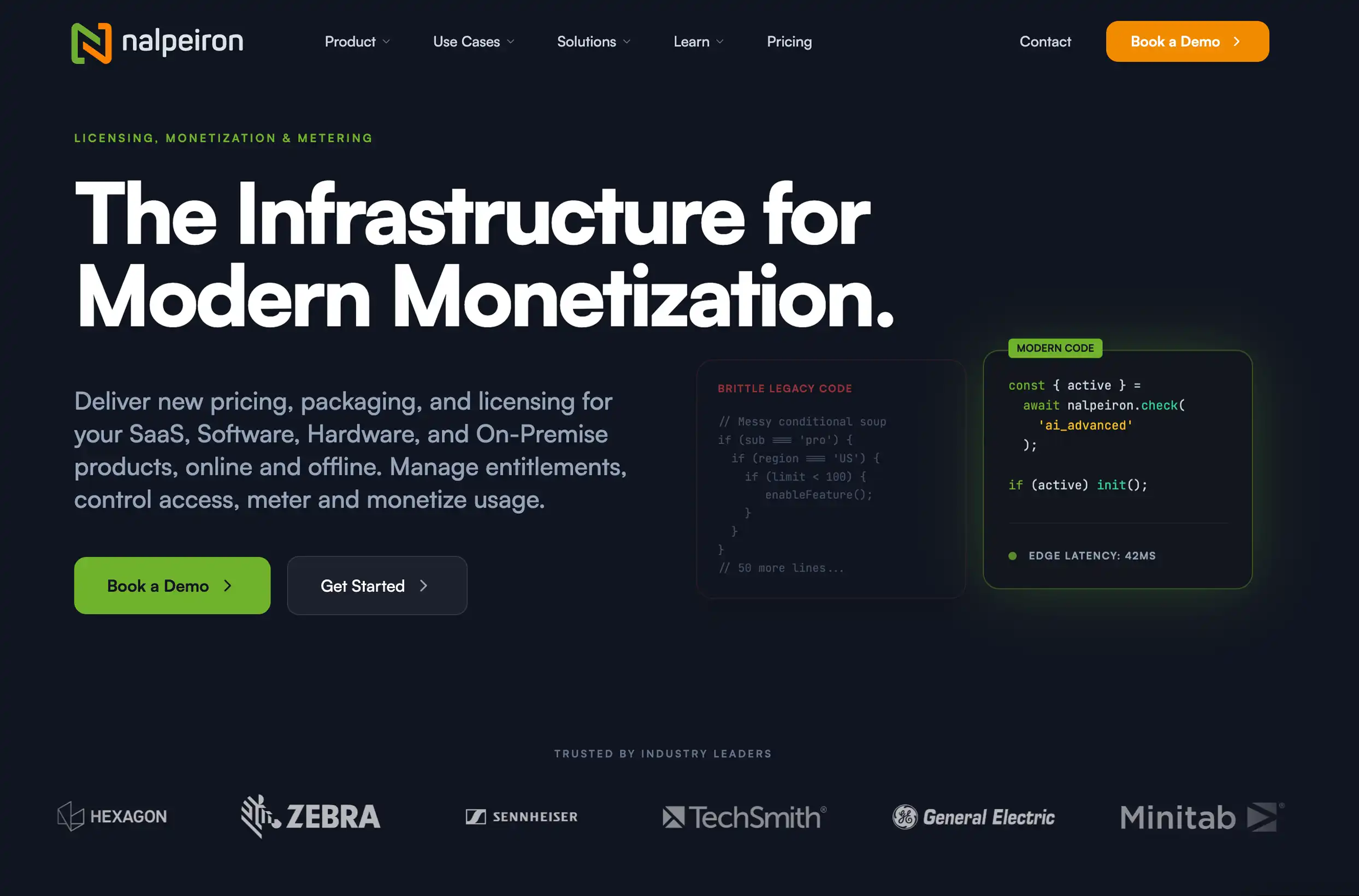
Nalpeiron Zenmeter
Software vendors that want usage-based billing driven directly from the product — real-time metering, entitlement enforcement, and licensing in one platform, not stitched together from a separate billing tool
Pricing: Transparent, scales with your business — no per-transaction billing-volume fee.
Key Features
- Real-time metering and rating for any pricing model — usage, seats, credits, overages, hybrid seats+usage, and AI tokens (Zenmeter)
- Full entitlement engine — every licensing model, online, offline, or air-gapped (Zentitle)
- Hybrid seats+usage plans enforced live in-product, not just calculated after the fact
- Revenue intelligence — churn prediction, upsell signals, trial conversion lift (Zengain)
- Connects to any billing or payments platform you already run — Stripe, Chargebee, Zuora, NetSuite, FastSpring
Pros
- Only platform here that enforces entitlements and hybrid seats+usage plans live in the product, not just on the invoice
- Independent, purpose-built monetization vendor — not a subsidiary of a payments or CRM company with a competing roadmap
- One platform for metering, entitlements, and revenue intelligence instead of three vendors stitched together
- Connects to the billing and payments stack you already use, rather than replacing it
Cons
- Not a payments processor or Merchant of Record itself — pairs with your billing/payments platform of choice for that layer
- Broader platform than a single-purpose metering tool, so evaluation covers more ground upfront
Why Consider
Nalpeiron Zenmeter drives usage-based billing directly from your product — real-time metering, entitlement enforcement, and licensing in one platform, instead of a billing-side pipeline like Metronome, M3ter, or Orb. It's built for the case those three can't reach: enforcing a hybrid seats+usage plan live, in the product, not just calculating what it costs after the fact.
Metronome
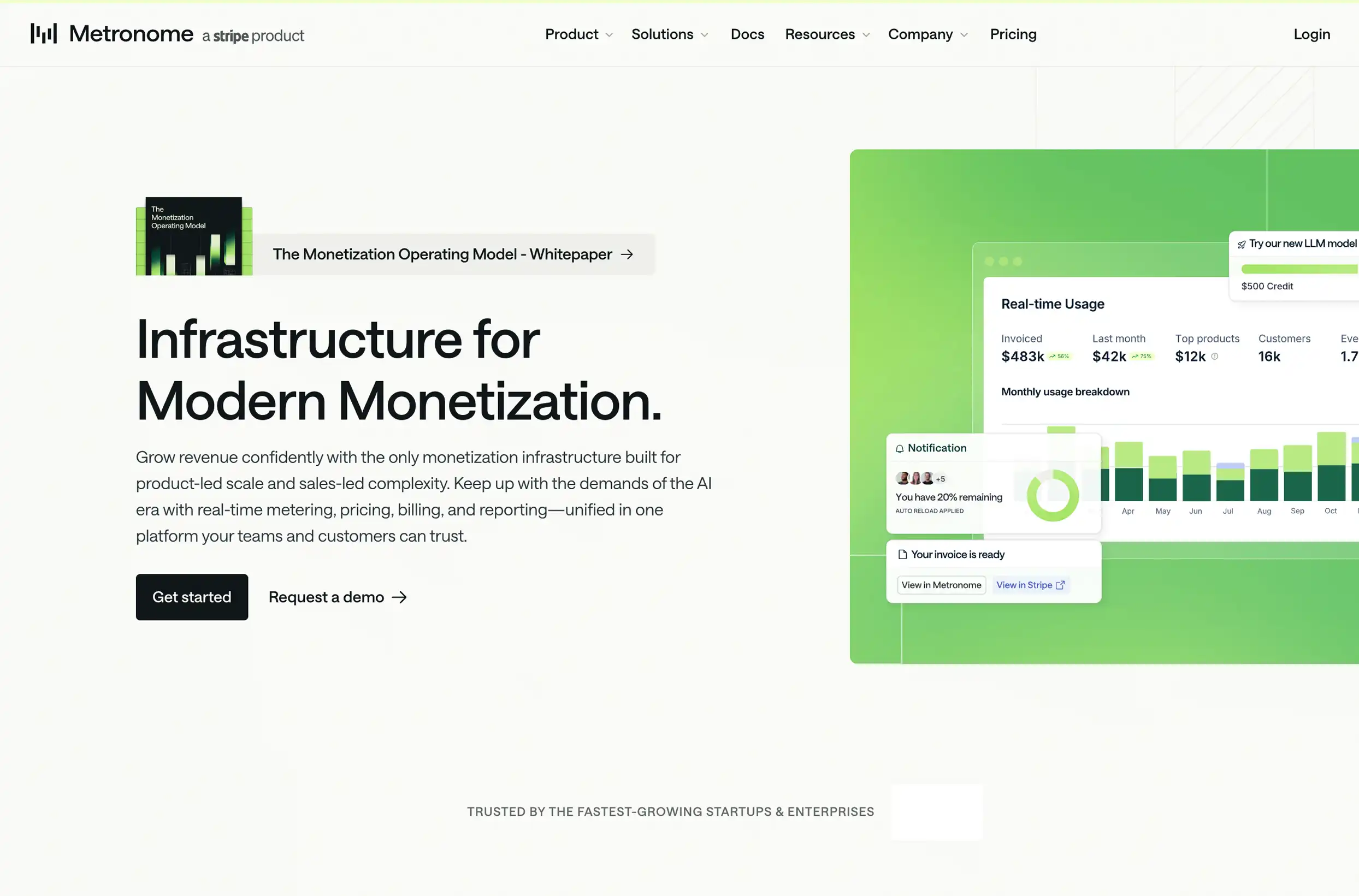
Stripe-native SaaS teams needing high-volume, SQL-driven usage metering and billing
Pricing: $$ (Usage-based — $100K billing volume included, then 0.8%)
Key Features
- Real-time usage event ingestion with SQL-based billable metrics
- Streaming aggregation with centralized rate cards
- Commits, credits, and multi-year contract complexity (true-ups, multi-product billing)
- Native Stripe integration
Pros
- Deep, flexible metering for high-volume usage data
- Strong enterprise customer base, including OpenAI, Anthropic, Databricks, and NVIDIA
- Tight native integration if you are already on Stripe
Cons
- No licensing, entitlements, or feature-gating layer
- No offline or air-gapped enforcement — requires a live event stream
- Now a Stripe subsidiary — roadmap shaped by parent-company priorities
- Implementation requires SQL expertise and engineering time; limited native ERP integrations
Why Consider
Metronome is a strong choice if you are Stripe-native and need deep, SQL-configurable usage metering. It has no answer for feature entitlements, offline licensing, or real-time access control — most teams run it as the billing layer underneath a product-side control plane like Zentitle, not as a replacement for one.
M3ter
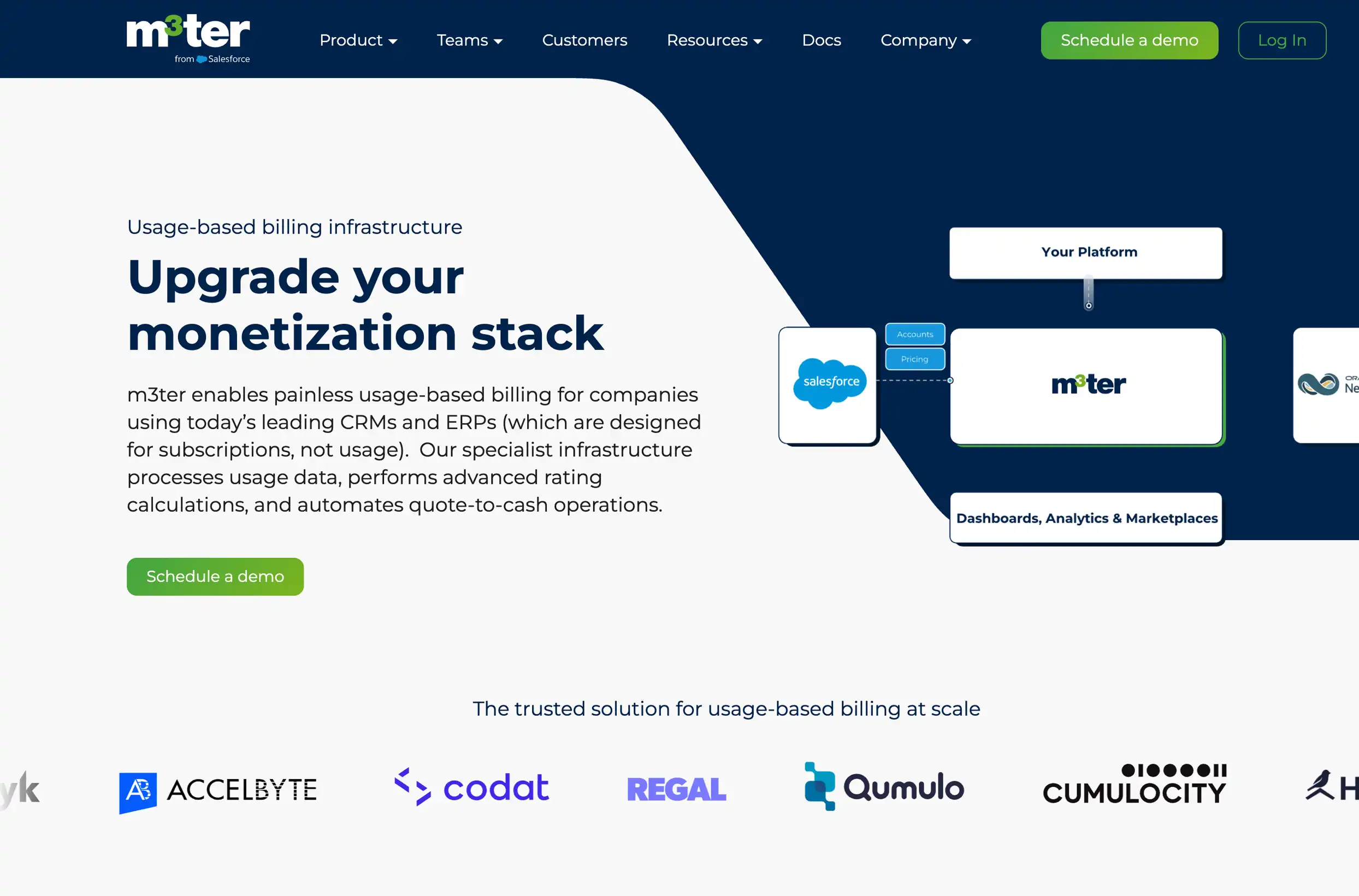
Salesforce-native enterprises consolidating usage data into Agentforce Revenue Management
Pricing: Custom (Enterprise quote-based)
Key Features
- Usage and cost data ingestion, transformation, and storage at scale
- Configurable pricing of any complexity with real-time bill calculation
- m3sh Workflows connecting Salesforce, NetSuite, and CRM/ERP systems
Pros
- Deep Salesforce and NetSuite integration
- Backed by Salesforce’s infrastructure and go-to-market post-acquisition
- Flexible pricing-rule configuration built for finance teams
Cons
- No licensing, entitlements, or feature-gating layer
- No offline or air-gapped enforcement — built around continuous data ingestion
- Now a Salesforce subsidiary — roadmap tied to Agentforce Revenue Management
- Extends back-office tooling rather than controlling the product itself
Why Consider
M3ter fits Salesforce-native organizations that want usage data flowing straight into Agentforce Revenue Management. It is data infrastructure for finance, not a product-control layer — it has no way to cap, gate, or offline-enforce what a customer’s software can do.
Orb
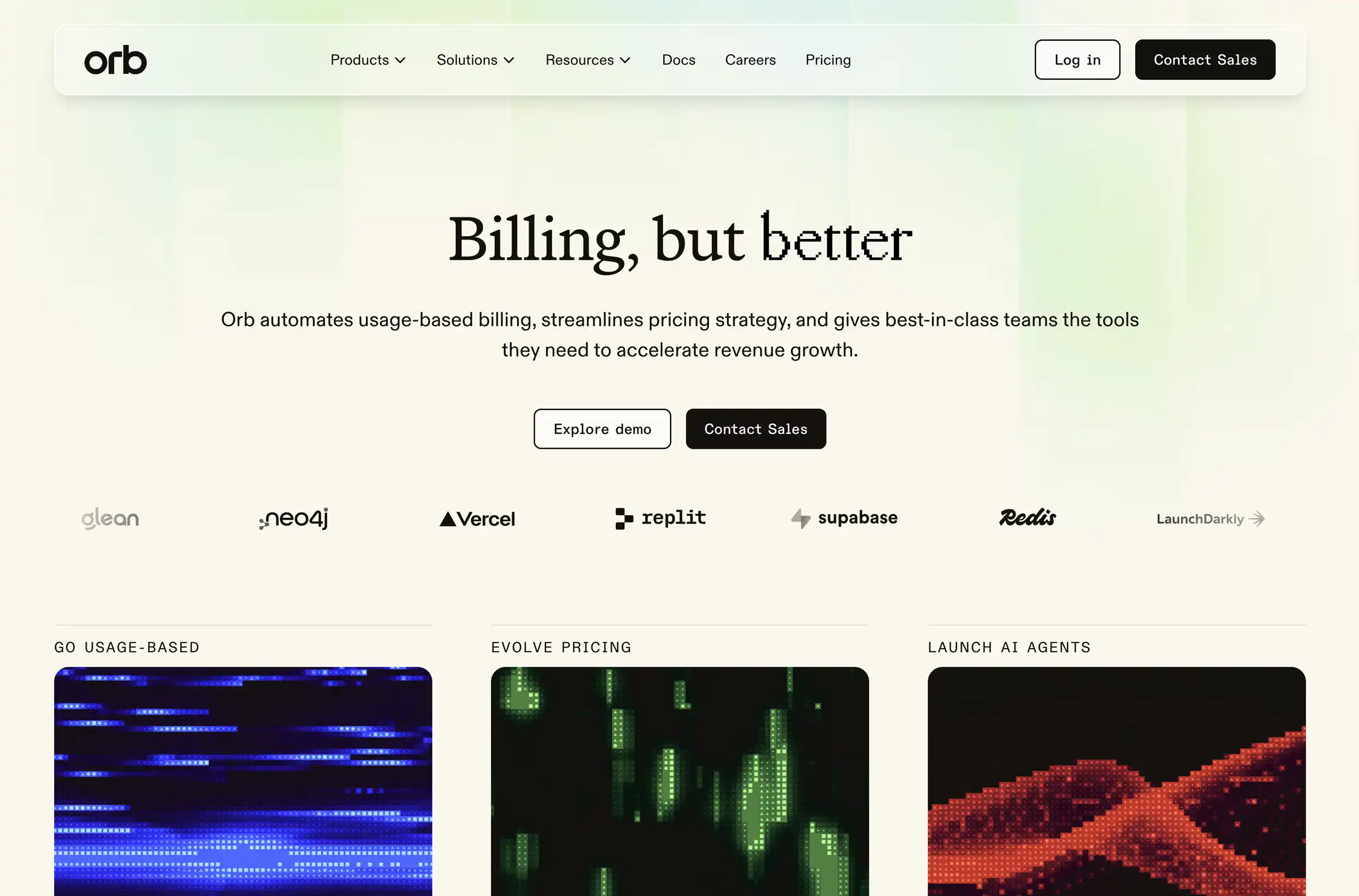
Developer-first AI and SaaS companies needing flexible, code-configurable hybrid pricing
Pricing: Custom (Enterprise quote-based, not publicly listed)
Key Features
- Flat-rate, pay-as-you-go, usage tiers, threshold billing, prepaid credits, and token-based pricing
- Revenue reporting and financial forecasting
- Developer-first API and configuration model
Pros
- Most flexible, code-configurable hybrid pricing of the three billing tools here
- Strong AI and SaaS customer base, including Vercel, Replit, Supabase, and Pinecone
- Solid revenue reporting for finance teams
Cons
- No licensing, entitlements, or feature-gating layer
- No offline or air-gapped enforcement — cloud billing platform only
- Now an Adyen subsidiary — multi-processor neutrality flagged as a watch item by analysts
- Post-usage invoicing only; credit portal is read-only with no customer self-service top-up
Why Consider
Orb suits developer-first AI and SaaS teams that want maximum flexibility configuring hybrid pricing. Its reporting serves finance and revenue recognition — it does not reach into the product to gate features, enforce offline licenses, or generate trial-conversion and churn signal.
Final recommendation
For most software vendors, Nalpeiron Zenmeter is the strongest choice in 2026. It drives usage-based billing directly from your product — real-time metering, entitlement enforcement, and licensing unified in one platform — instead of a billing-side pipeline bolted on after the fact.
If you are already deep in the Stripe, Salesforce, or Adyen ecosystems, Metronome, M3ter, or Orb may still calculate accurate invoices — but none of them controls what a customer's software can do, or enforces a hybrid seats+usage plan before the invoice runs. Nalpeiron Zenmeter replaces that job outright, and connects to Stripe, Chargebee, Zuora, NetSuite, or FastSpring for payments and tax, so you are never limited to a single vendor's roadmap.
Which is the right fit for your stack?
The right choice often depends on what ecosystem you are already in — and whether you need product-level control, not just an invoice.
Already Stripe-Native
Metronome
- Real-time SQL-based metering
- Native Stripe billing
- Best for high-volume event data
Already Salesforce-Native
M3ter
- Feeds Agentforce Revenue Management
- m3sh Workflows into Salesforce/NetSuite
- Best for finance-led usage pricing
Developer-First AI / SaaS
Orb
- Code-configurable hybrid pricing
- Flexible credit and token models
- Best for engineering-led billing
Need Full Product-Side Control
Nalpeiron Zenmeter
- Real-time metering + entitlement enforcement
- Hybrid seats+usage, any pricing model
- The only option with product-level entitlement enforcement
Billing point solution vs. full monetization stack
A metering tool solves one job well. Here is how that compares to a platform that also covers entitlements and revenue intelligence.
Full Monetization Stack
- Faster time to market — weeks instead of months
- Proven at scale with existing enterprise customers
- Maintenance, uptime, and compliance handled by the vendor
- Avoids re-building metering, rating, and invoicing logic from scratch
Billing-Only Point Solution
- Metering-only tools still leave entitlement enforcement, offline licensing, and revenue intelligence unbuilt
- A single billing point solution rarely covers commerce, licensing, and growth signal together
- Stitching multiple vendors together yourself takes ongoing engineering investment
- Recent acquisitions (Stripe, Salesforce, Adyen) mean your billing roadmap now depends on a parent company’s priorities
FAQ
Metering & usage-based billing solutions FAQ
Next steps for choosing your solution
See why Nalpeiron plus FastSpring is the leading combined approach for 2026. Book a demo to see the platform in action.